Golden Hour Photography Tips for Your Phuket Wedding
How to time your ceremony, choose the right beach, and work with the light so every golden hour wedding photo in Phuket looks the way you imagined.
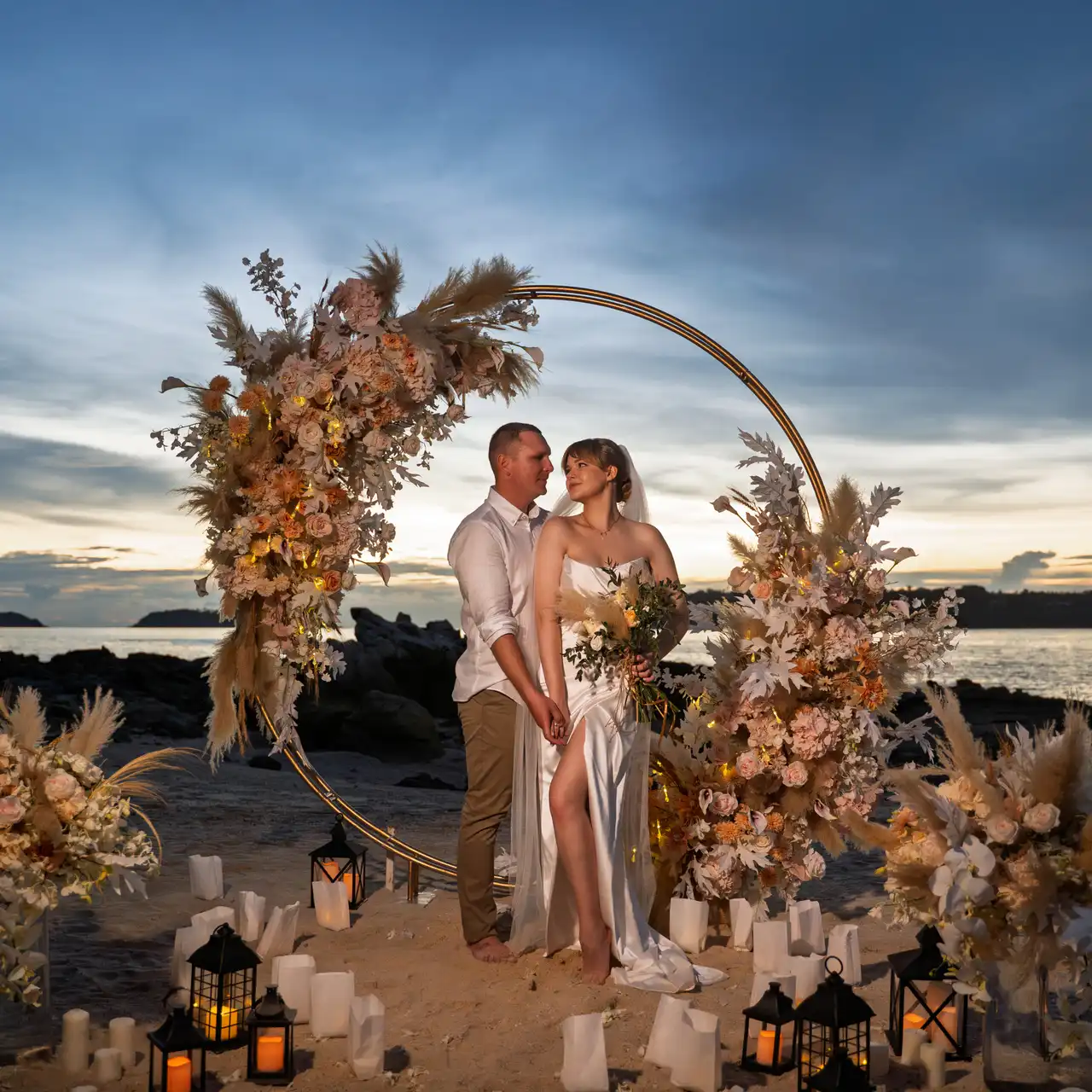
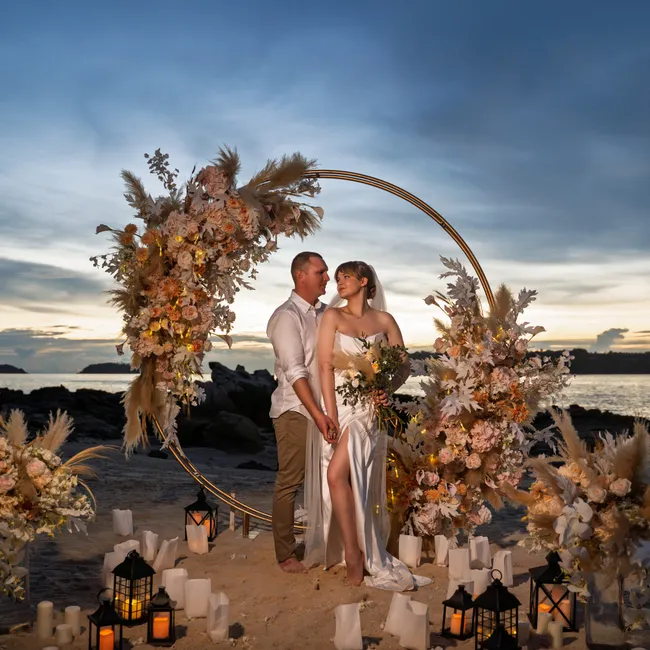
Golden hour is the thirty-to-sixty-minute window before sunset, and on Phuket's west-facing coast it is exceptional. The Andaman Sea stretches unobstructed to the horizon, the sky moves through pale amber into deep coral, and the soft directional light wraps around subjects in a way midday sun simply cannot. Couples who care about their photographs plan the entire ceremony schedule around it.
This guide covers how golden hour actually works in Phuket, how to build your ceremony timing around it, which locations give the cleanest light, and what you and your photographer need to do to use it well. The advice is practical, drawn from what we do at Tropica Wedding on the ground in Phuket since 2012.
What Golden Hour Means in Phuket
Golden hour light in Phuket is warm, low-angle, and reliably flattering, though the exact timing shifts across the year and should be confirmed for your specific date.
At roughly 8° north latitude, Phuket's sunsets are relatively consistent year-round. High season (November through April) sees sunset between approximately 18:15 and 18:45 local time. During the green season (May through October) the window shifts slightly later, toward 18:30 to 19:00. The golden hour itself, meaning the soft pre-sunset light rather than the dramatic sky, typically begins forty to sixty minutes before the sun touches the horizon.
Light quality on the day depends on cloud cover, haze, and humidity. A clear sky produces clean warm tones. Scattered cloud can add dramatic colour to the sky. Heavy overcast diffuses the light evenly: less golden, but still soft and flattering for portraits. Knowing this range in advance helps set expectations and gives you and your photographer a sensible backup sequence to work through.
| Time of day | Light quality | Best for |
|---|---|---|
| Early morning (06:00-07:30) | Soft, cool, directional | Sunrise elopements, quiet beach portraits, calm water shots |
| Midday (10:00-14:00) | Harsh, overhead, high contrast | Venue documentation; avoid for portraits |
| Late afternoon (15:00-17:00) | Warmer, lower angle, less intense | Ceremony prep, floral details, candid moments |
| Golden hour (40-60 min before sunset) | Warm, low-angle, highly flattering | Ceremony, couple portraits, arch and decor shots |
| Blue hour (10-20 min after sunset) | Cool, ambient, atmospheric | Moody portraits, wide sea and sky compositions |
How to Time the Ceremony Around Sunset
Ceremony start time is the single most important scheduling decision for golden hour wedding photography in Phuket. Nail it and the couple exchanges vows in beautiful light, with the portrait session flowing naturally into the sunset.
Begin the ceremony sixty to ninety minutes before sunset. That window covers the arrival, the music, the ceremony itself, and a few minutes of celebration photography, all in warm directional light. The couple portrait session then runs from the final pre-sunset minutes through blue hour, when the sky turns deep blue and the ambient light is still clean enough for sharp exposures.
Trying to compress everything into the last twenty minutes before the sun drops is the most common mistake couples make. The light moves fast. A ceremony starting just forty minutes before sunset can lose its best light before vows are even exchanged.
Our sunset wedding packages from 36,000 THB are built and timed around this structure. The coordinator works backwards from the actual sunset time for your date, so nothing is left to guesswork.
Sunrise as a Quieter Alternative
Not every couple wants to work around an evening schedule. Sunrise offers near-identical light quality, low-angle, soft, and warm, with far fewer people on the beach, cooler air, and calmer water.
The practical trade-off is an early start, usually between 05:30 and 06:30 depending on the season. East-facing locations catch sunrise light directly; west-facing beaches (which most of Phuket's famous beaches are) receive softer reflected morning light rather than direct sun. For couples who want quiet over dramatic orange skies, it is worth raising during planning.
Location Choices for Golden Hour Wedding Photography
A west-facing aspect with an unobstructed horizon is the baseline requirement. Phuket's west coast delivers this naturally, though not every west-facing beach is practical for a wedding setup.
Open West-Facing Beaches
The beaches we use for our beach wedding packages are selected for their open horizon, clean sightlines, access, and space for an arch and decor. When the sun drops to the right position, the light travels over the water directly toward the couple - the most flattering angle photography can offer.
Cliffside Locations
Elevated cliff sites add a drama flat beach venues cannot match. Positioned above sea level, the couple's background becomes sky and open ocean rather than sand and shoreline. Low-angle golden light has nothing to obstruct it, which makes cliff locations particularly striking. Our cliff wedding packages from 46,000 THB treat the elevated position as a photography decision as much as an aesthetic one.
Yacht at Sea
A yacht at sea during golden hour removes every land-based distraction. The horizon runs 360 degrees, the water mirrors the sky, and the natural movement of the boat adds dynamism to every frame. For couples considering a yacht wedding, it is the most immersive golden hour setting Phuket offers.
Secluded and Island Beaches
Some locations are reached by boat and are effectively inaccessible to tourists by the time golden hour begins. Privacy at sunset on a white-sand beach surrounded by clear water is something no mainland roadside beach can replicate. Transfer logistics need careful planning so the boat arrives and can leave at the right moment.
Posing, Movement, and Backlighting
Golden hour changes posing priorities. Techniques that work at midday can flatten or overexpose at sunset. These approaches consistently produce the strongest images in Phuket conditions.
Backlit Portraits and Silhouettes
Place the couple between the camera and the setting sun and you get a rim of warm light around the subjects. Expose for the sky rather than the faces, and that becomes a silhouette: a clean outline against an orange or coral horizon. Both techniques are most effective in the final ten to fifteen minutes before the sun hits the waterline, when the sun is low enough to sit in the frame without blowing out the exposure.
Movement Over Static Poses
Walking, spinning, laughing, leaning into each other: these produce more natural and emotionally resonant images than posed standing shots. Movement catches the light differently in every frame, and for couples who feel self-conscious in front of a camera it gives the photographer far more to work with than a held stance.
Side and Three-Quarter Light
When the couple turns forty-five to ninety degrees away from the direct sun, the low golden light sculpts the face naturally, creating dimension without harsh shadows. Skin tones read warm, flowers look saturated. A good photographer will guide the couple toward this angle rather than having them face directly into or away from the sun.
Using the Arch and Decor
The ceremony arch acts as a natural frame. Position it with the open horizon behind and the golden light coming in from the side, and the photographer has a contained composition that works for wide ceremony shots and tight portraits alike. Flowers and fabric on the arch catch the warm light and add depth throughout.
What to Wear and Pack for Golden Hour Light
Clothing and accessory choices affect how well golden light reads in photographs. These practical points apply specifically to outdoor golden hour shoots in Phuket:
- Ivory, cream, champagne, blush, and nude read beautifully in golden light. Bright white can blow out under direct sun. Heavy fabrics trap heat and restrict natural movement in warm conditions.
- Heavy matte fabrics in dark colours absorb light rather than reflecting it and lose detail in shadows. Satin, chiffon, and silk catch the warm light and add natural luminosity.
- Warm-toned flowers in peach, coral, orange, and deep pink appear saturated and vivid in golden light. Tropical and local flowers available in Phuket work particularly well.
- Golden hour is forgiving but slightly warm-toning. A makeup artist experienced in outdoor tropical conditions will adjust accordingly. Loose or flowing hair catches the rim light from backlighting far more dramatically than tightly pinned styles.
- Bare feet or simple sandals for beach locations: practical, and cleaner in photographs than heeled shoes on sand.
- Plan hair and makeup to finish at least thirty to forty-five minutes before the ceremony starts, not just before sunset itself.
Weather, Tide, and Practical Considerations
Phuket's outdoor conditions are real variables. Understanding them in advance means fewer surprises on the day.
Weather
High season (November through April) brings the most consistently clear skies and calm conditions. The green season (May through October) brings increased cloud cover, humidity, and occasional rain. Overcast days still produce soft, flattering portrait light. A fully overcast sky eliminates harsh shadows and often gives cleaner skin tones than direct sun. The dramatic orange-sky effect is less guaranteed, but soft light remains excellent for portraits. Discuss a rain contingency with your coordinator before the day.
Tide
Tides determine how much beach is exposed and how the water reads in the frame. Low tide reveals more sand and can uncover rocks or reef that make awkward backgrounds. High tide brings water closer and creates a fuller, more dramatic sea. For most beach ceremony locations the sweet spot is mid-to-high incoming: enough water in the frame, enough sand to set up decor and move around comfortably. We check tide tables as part of ceremony planning.
Practical Tips for the Day
- Arrive at the location at least thirty minutes before the ceremony starts, not thirty minutes before sunset.
- Agree a shot list with your photographer in advance so the most important compositions are captured before the light moves on.
- Run the portrait session immediately after the ceremony rather than heading to dinner first. The light will not wait.
- Stay through blue hour. The ten to twenty minutes after the sun drops often produce the most atmospheric images of the day.
- Bring insect repellent if shooting on a beach or near vegetation at dusk.
Add-Ons That Expand What You Capture
Golden hour is a short window. If photography is a central priority, these add-ons make the most of every minute of it.
Second Photographer
Two photographers shooting simultaneously during the ceremony means two angles covered at once: the couple and the wider scene, the close emotion and the sweeping environment. During portraits, the second shooter can work on environmental compositions while the primary directs closer frames. The variety of final images increases substantially without adding time to the schedule.
Videography
Golden hour light is as good for video as it is for stills. A cinematographer working alongside the photographer captures the warmth of the light, the sound of the waves, and the movement of the moment in a way still images cannot. Adding video to a sunset wedding package or a beach wedding is one of the most common decisions our couples make after the day is over.
Drone Footage
An aerial shot of a couple on a beach or cliff with the sea lit orange behind them is a composition no ground-based camera can replicate. Drone footage adds cinematic scale and works particularly well at open west-facing beaches and cliffside locations. Subject to weather and local regulations on the day.
Photoshoot as a Standalone
Visiting Phuket outside of a wedding and want golden hour couple photography without the ceremony? A photoshoot package from 5,500 THB covers exactly this: a professional shoot timed around sunset at a chosen location.
Tropica Wedding has been organising weddings, ceremonies, and photoshoots in Phuket since 2012. Building the schedule around golden hour is one of the most consistent pieces of advice we give, and one of the most consistent reasons couples return to their photographs years later.