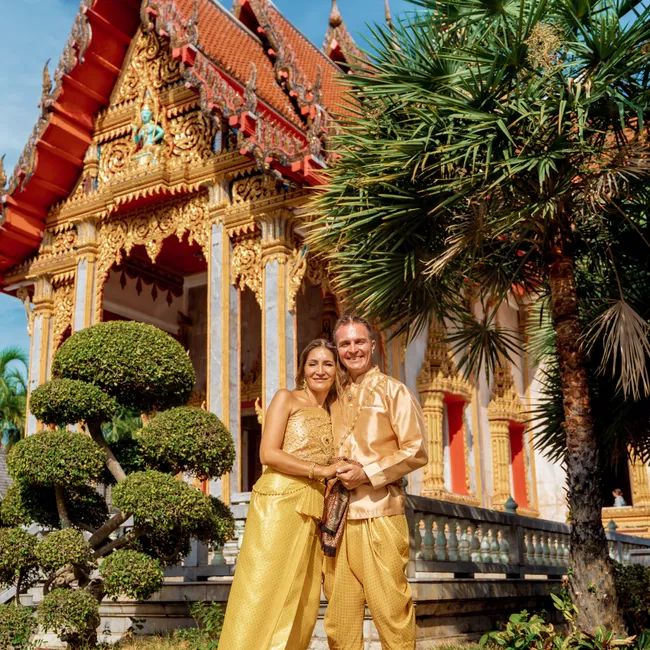
Guide to Traditional Thai Wedding Ceremonies in Phuket
Buddhist blessings, monk chanting, the Rod Nam Sang water ritual, and the cultural meaning behind each element - a practical guide for couples planning a traditional Thai wedding ceremony in Phuket.
A traditional Thai wedding ceremony is one of the most culturally meaningful formats available to couples in Phuket. Rooted in Theravada Buddhist custom, it centres on monk chanting, sacred blessings, the Rod Nam Sang water-pouring ritual, and the sai monkhon white thread that symbolically joins the couple. Calm, respectful, and rich with intention, it is a genuinely distinct experience that differs significantly from a Western-style symbolic ceremony on the beach.
This guide covers what a traditional Thai wedding ceremony actually involves, what happens step by step, the cultural meaning behind each element, and the formats Tropica Wedding offers in Phuket. We have been organising Thai ceremonies alongside beach, cliff, and yacht weddings since 2012, and this article reflects how we approach them with care for the Buddhist context they carry.
What Makes a Thai Wedding Ceremony Different
A traditional Thai wedding ceremony draws from Buddhist merit-making practice and Thai cultural custom. It is not legally binding, but it carries genuine spiritual and cultural weight that many couples find more meaningful than a symbolic script.
Where a Western symbolic ceremony centres on vows exchanged between the couple, a Thai Buddhist ceremony centres on receiving blessings from monks, making offerings, and participating in rituals believed to bring prosperity, harmony, and merit to the marriage. The couple is present not simply to declare love to each other, but to receive goodwill from the monks and to honour the traditions of the culture they are marrying within.
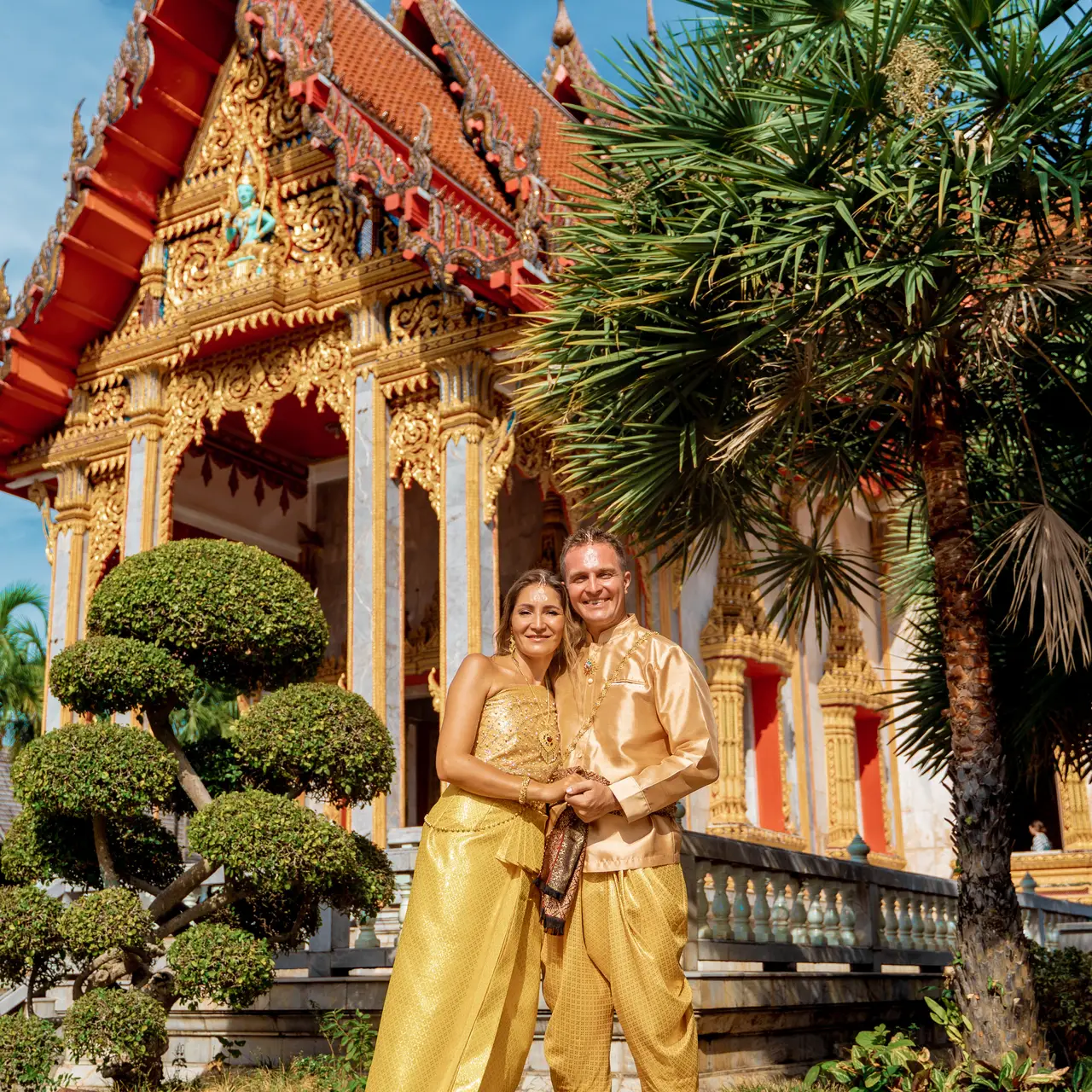
At Wat Chalong, Phuket's most prominent Buddhist temple and the one we use for temple ceremonies, the setting adds considerably to the atmosphere. Ornate pavilions, golden Buddha images, incense, and the measured rhythm of Pali chanting create an experience that no beach arch or marquee can replicate.
Key Elements of a Traditional Thai Wedding
Each ritual element has a specific purpose. Knowing what they mean makes the experience more personal and far more memorable.
Monk Chanting and Buddhist Blessing
Monks chant sutras, passages from Pali scripture, to invoke merit and protection for the couple. The chanting itself is considered a form of giving, and receiving it respectfully is central to the ceremony. Couples sit quietly and attentively throughout this phase. The length varies according to the number of monks present and the arrangement made in advance.
Sai Monkhon - The White Sacred Thread
A long white cotton thread, called sai monkhon (also written sai sin), is looped around the joined hands or heads of the couple to form a symbolic connection. The thread is first blessed by the monks, then placed by the officiating monk or elder. It represents unity, purity, and the bond being created. In some Thai families, the thread is also passed through the hands of all guests, linking the blessing of the community to the couple.
Gifts and Offerings for the Monks
Before the ceremony begins, the couple prepares khan maak, traditional offerings presented to the monks. These typically include candles, incense, yellow cloth, and food. Presenting them with both hands and a slight bow is an important part of the merit-making aspect of the ceremony. Tropica Wedding prepares the appropriate offerings for our Thai ceremony packages.
Rod Nam Sang - The Water-Pouring Ritual
The Rod Nam Sang is among the most visually distinctive elements of a traditional Thai wedding. A conch shell is filled with blessed water, and the couple kneels side by side with joined hands resting on a low tray. Guests and elders pour the water gently over the couple's hands, one by one, each offering a personal blessing or good wish. The water flows freely, symbolising the washing away of misfortune and the flowing of blessings into the marriage. The ritual creates a natural moment for photography and is deeply personal when family or close friends are present to take part.
Auspicious Timing
In traditional Thai culture, the date and time of a wedding are often chosen based on auspicious calculations. Tropica Wedding does not require couples to follow specific astrological customs, but morning ceremonies are culturally preferred for merit-making activities, as morning is associated with brightness and good omens. If timing matters to you, we can discuss the scheduling around it.
What to Expect Step by Step
A temple ceremony at Wat Chalong generally follows this sequence. The exact flow may vary according to the number of monks and the specific package.
- The couple and guests arrive at Wat Chalong dressed modestly, shoulders and knees covered. Footwear is removed before entering the temple pavilion.
- The couple presents khan maak offerings to the monks with both hands and a slight bow.
- Monks chant Pali sutras while the couple sits quietly. This phase typically lasts 15-30 minutes.
- The white sacred thread, sai monkhon, is placed around the couple's joined hands or heads by the officiating monk or elder, symbolically linking them.
- The couple kneels at the blessing tray for the Rod Nam Sang water ritual while guests pour water from the conch shell over their joined hands, each offering a personal blessing.
- Our photographer documents the key moments throughout - chanting, thread placement, and the water ritual - without disrupting the flow of the ceremony.
- After the ceremony, the couple has a photo session in and around the temple grounds, with their rich architectural and garden backdrops.
- For the combined Thai + European format, the couple then transfers to a beach location for a second, Western-style symbolic ceremony with decor, an arch, and a ceremony master.
Dress and Etiquette
Respectful dress is a condition of participation at a Buddhist temple, not a suggestion. Both the couple and their guests should arrive with shoulders and knees covered. Many couples choose traditional Thai formal attire: the groom in a Thai silk shirt and trousers, the bride in a traditional Thai dress or fitted silk ensemble in auspicious colours such as gold, cream, or red. Western bridal attire is also appropriate; the key requirement is modesty.
Inside the temple, movement should be calm and voices kept low. Shoes are removed at the entrance. When receiving the thread or blessing, bow slightly and accept with both hands. Pointing feet toward Buddha images or monks is considered disrespectful in Thai custom. Our team will guide the couple and their guests through all etiquette specifics before the ceremony begins.
Thai Wedding Formats and Starting Prices
Tropica Wedding offers three formats that include traditional Thai ceremony elements. All are symbolic; none are legally binding under Thai law.
| Format | What it includes | Starting price |
|---|---|---|
| Thai temple ceremony at Wat Chalong | Monk chanting, Rod Nam Sang, sai monkhon, offerings, temple photo session | 18,000 THB |
| Thai ceremony on the beach | Thai blessing elements in an outdoor beach setting, decor, photo session | 28,000 THB |
| Combined Thai + European ceremony | Temple ceremony in the morning + beach symbolic ceremony with arch and ceremony master | 48,000 THB |
The temple ceremony is the most culturally immersive format and a natural starting point for couples new to Thai Buddhist customs. The combined format works well for couples who want both the depth of a Thai blessing and the visual experience of a Western-style beach ceremony. See the full Thai wedding ceremony in Phuket page for complete package details.
Symbolic vs Legal: What to Know
All Thai wedding ceremonies offered through Tropica Wedding are symbolic. They carry cultural and spiritual meaning but are not legally binding under Thai marriage law. If you wish to have your marriage legally recognised in Thailand or in your home country, that process is handled separately through your embassy and the relevant Thai civil authorities; it does not happen at the temple.
Most international couples prefer the symbolic format because it removes documentary complexity while preserving everything that makes the ceremony meaningful. A symbolic certificate can be provided as a keepsake.
Combining a Thai Ceremony With a Beach or Cliff Wedding
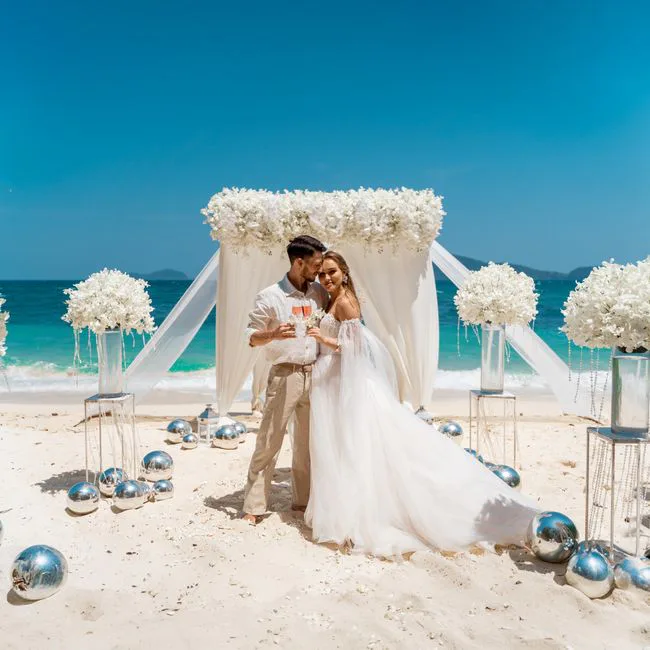
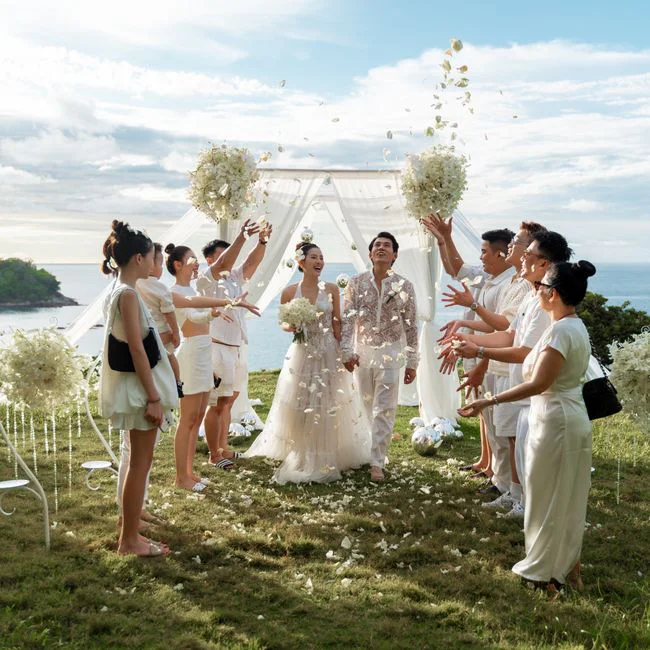
Some couples begin the day with a Thai temple blessing at Wat Chalong, then transfer to a beach or cliff setting for a second, Western-style ceremony with an arch, floral decor, a ceremony master, champagne, and music. The morning has a quiet, contemplative character; the afternoon shifts to something more celebratory and photogenic.
The combined Thai + European package starts from 48,000 THB and can be extended with makeup, hair, videography, drone footage, extra photography time, and a beach dinner. For a cliff setting as the second half of the day, explore the cliff wedding packages. The beach wedding packages pair naturally with a morning temple ceremony for the classic combination.